What Quality Wayfinding Is Actually Worth to Developers.
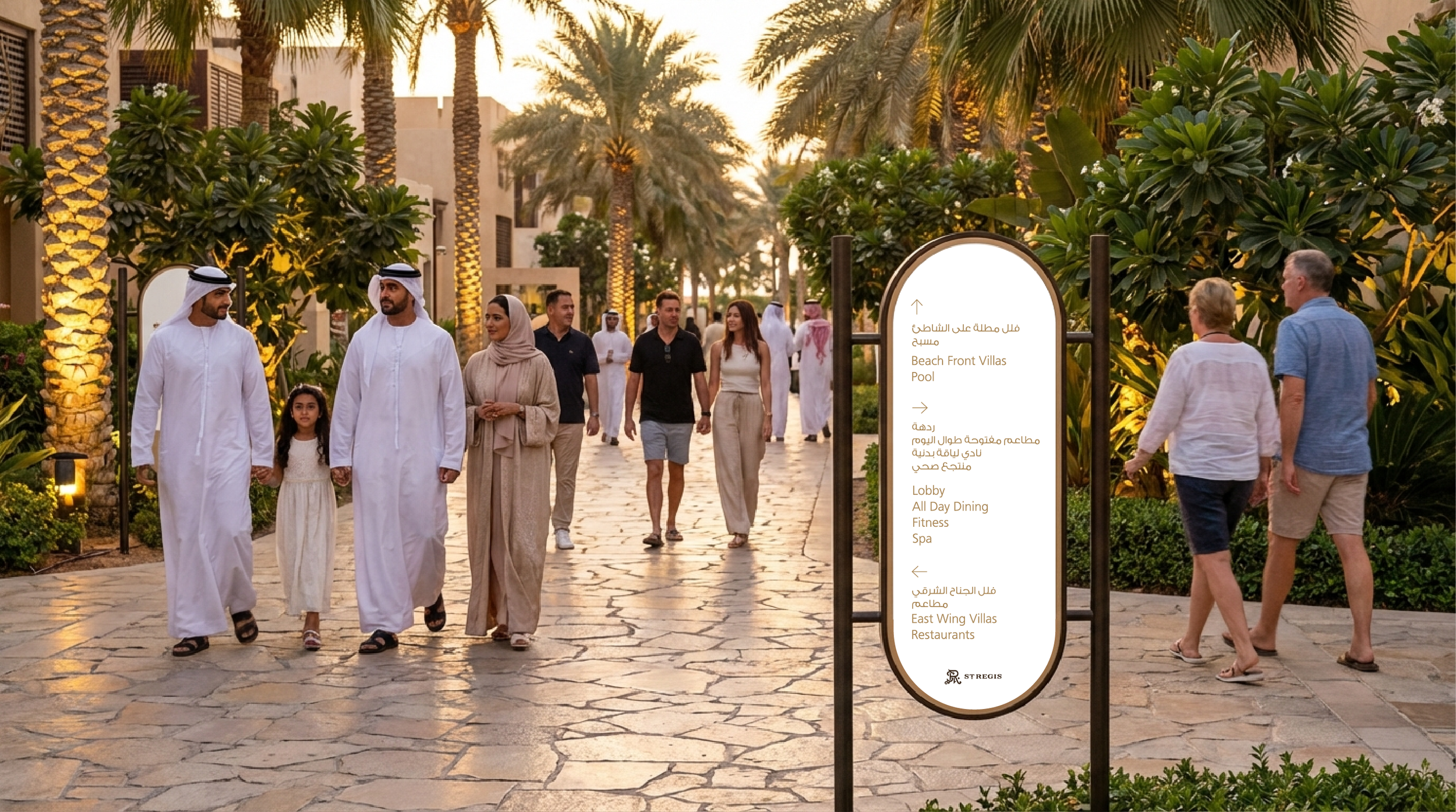
Wayfinding is Critical In Connecting People to Places & Spaces
Throughout history, people have gravitated towards town squares, their local markets, and other public places. This is traditionally where goods and wares are showcased and sold, food displayed, made and consumed, and bargains sought and offered. This was — and still is — the underpinnings of commerce and public life. In the modern era of hypermarkets, mega malls, and e-commerce, people still make the pilgrimage to these types of public places: food halls, retail centres, green spaces with the kids, the local fair or fish market, Chinatown, or a pop-up food festival.
The reason is that the fabric of human existence is woven together in settings where people go about their daily existence. Whilst the settings may have changed to some degree and have clearly become modernised, the need for people to gather, to be engaged, and to enjoy these experiences has not. If anything, as competition for time has increased, the need to gain the attention of and attract visitors to public places away from cyber spaces has increased — so too the requirement of providing visitors increasingly higher levels of convenience, comfort, service, and amenity.
As life and the spaces we encounter become more complex, the need for cities, master developers, and asset managers to understand how people get to these places and navigate them has become more important than ever — to ensure visitors are provided convenience as well as memorable and positive user experiences.
You don't need an intimate knowledge of the history and science of wayfinding to understand its critical importance in your life and in business. A well thought out wayfinding strategy and good navigation planning, when combined with the appropriate visual cues (as well as quality signage), can get most people from Point A to Point B. However, without a carefully constructed wayfinding strategy and masterplan, signage alone can turn out to be inefficient, inconvenient, and potentially cause more problems than it seeks to solve.
Wayfinding Is More Than Just Signage.
Regrettably for asset owners and operators, a lack of clear and understandable navigation and poorly executed wayfinding greatly diminishes the visitor experience and creates a lasting negative perception of the destination. With that said, we do see the tide turning when it comes to focusing on delivering positive visitor experiences when it comes to both wayfinding and placemaking.
In short: Signage without strategy isn't wayfinding — it's visual clutter that sends all the wrong signals.
Well-planned architecture, when combined with the use of thoughtful lighting, landscaping, and other gestures, provides a set of visual cues that go a long way to defining the paths and entrances to and from destinations of interest. In the first instance this allows for intuitive navigation, which is something at Creative Dialog we always advocate to our partners as the first step.
When combined with simple, effectively designed information that is delivered creatively and thoughtfully across a quality wayfinding programme, we add another layer of assistance that plays a huge role in allowing people to focus on enjoying the reason that they set off on their journey in the first place — be it a cup of coffee with friends, a business meeting with a new client, or an outing with the family.
It's All About Experiences First, The Journey Second.
One of the greatest misnomers in the field of wayfinding is that wayfinding is just signage. Of course, to the casual observer this may look like the case; however, to the seasoned professional, signage is only a small element that goes into framing a successful wayfinding strategy. Signage design, along with the information that is to be designed for the signage content, is an art unto itself. Yes, information and signage design are important elements of an overall approach to wayfinding — however they are far from being the complete solution.
In many ways, the best wayfinding signage sits humbly in the background, doing its job with little fanfare. But sometimes it needs to stand out and be a part of the overall design context too. That's because wayfinding is actually about understanding the human factors that go into how and why people navigate the spaces that they visit, and can become a part of embellishing a site narrative or extending the brand expression of a well-crafted destination.
So, when a destination that's being designed for human consumption is underway, it stands to reason that the navigational tools should be on-brand and fit for purpose by integrating them at the earliest possible stage into the overall design of the destination in the best way possible. To do this, a quality wayfinding consultant like Creative Dialog would begin to delve into things like semiotics, identity, typography, information and graphic design, materiality and form — along with taking into consideration spatial awareness and cognitive mapping of the visitor — all of which can be utilised to design some pretty terrific wayfinding and signage systems.
At the heart of successful wayfinding is the notion of putting the user experience first.
For instance, if the user experience is not a positive one — whether it is at a retail centre, hospital, or airport — the user is far less likely to return unless they really have to. This is especially the case in retail malls, where visitor experience is paramount to successful repeat visitation. Users who feel the stress or anxiety of being lost (while they may not understand the wayfinding was done poorly) still maintain those negative thoughts long after the visit has ended. This is bad for business, bad for public relations, and bad for reputation when user experiences can be shared instantly across a variety of social media platforms — usually accompanied with a slew of derogatory hashtags. No asset manager wants their destination to become a failure meme.
By putting the user first, shrewd developers and asset managers are making a statement that they understand and care about their visitors' needs, and in practical terms they back this up by providing a quality-led wayfinding system to guide their guests across the visitor journey.
For asset owners, doing this can flow through to the bottom line — through increased dwell time and higher levels of customer satisfaction, which in turn can deliver higher consumer spend and rental yields. Combining wayfinding, easily understandable information, vibrant environmental graphics, public art, placemaking, and well-crafted signage systems allows end users, residents, and visitors alike to navigate and orientate themselves within the built environment in an intuitive, quicker, easier, and ultimately more enjoyable way. This is the kind of outcome we are always looking to deliver for our partners.
Such environments can of course include transport systems, parking garages, commercial office spaces, residential buildings, and developments — along with a myriad of other places like retail malls, convention centres, airports, hospitals, company headquarters, college campuses, as well as hospitality destinations such as hotels and resorts.
It is vital that these destinations, along with master-planned communities, civic spaces, cities, and their transport systems, all adopt the best practices possible when it comes to a quality wayfinding programme that allows people to navigate through the built environment — whether in Singapore, Bangkok, Sydney, or anywhere internationally for that matter.
The benefits of engaging with a wayfinding consultant that can help implement a quality wayfinding and signage design programme are clear, and become self-reinforcing when they deliver a positive impact on the user experience. Substantial commercial benefits await master developers, property owners, and asset managers who seek to improve their bottom lines, boost repeat patronage, and improve overall customer engagement.
For a wayfinding system to fully succeed, a master developer must know its visitors and how they will navigate any given development so that it can create the appropriate wayfinding programmes that are on-brand and reflect the proper messaging, language, visibility, and tonality that will result in an enhanced user experience without being over-prescriptive. From our perspective, wayfinding acts as the final link between the built environment and the end user — such as a resident, customer, or business owner. Good wayfinding and placemaking transforms a newly built development into a destination by effortlessly guiding residents, visitors, and owners to where they need and want to go.
Bottom Line
It's all about providing convenience. This is the intrinsic value that quality wayfinding adds to projects. It is part art and part science, and should always aim to enrich lives by helping create and manage places for people to live, work, shop, and play. At Creative Dialog with more than 25 years of industry experience across wayfinding, signage design, placemaking, and destination branding, we put people, strategy, and expertise at the forefront of what we do — to ensure that the visitor is always the hero.
Where wayfinding is underperforming or about to enter a new project phase, our Belonging Audit™ provides a structured starting point — assessing how your destination performs against the four dimensions of belonging: Navigate, Recognise, Connect, Dwell.
Like What Your Reading?
These articles are a small part of our research and strategic advisory Services. Get in touch with Creative Dialog today to see how we can distill these insights into actionable strategies and solutions to improve the visitor experience across your destination.
Looking for deeper analysis of the Visitor Experience economy?
Read more over at Extended Dialog.