


Wayfinding Design for Asia.
Navigation Stress Is Invisible.
Its Impact on Your Visitor Experience Isn't.
Wayfinding.
We design human-centric solutions to complex navigation challenges — so visitors spend more time doing the things they love, with greater convenience and less staff intervention.
When wayfinding works, nobody notices it.
When it fails, everyone does. Visitors become anxious, staff get overwhelmed with directions requests, dwell times drop, and the carefully crafted experience you invested millions in starts to unravel. The problem is that most developers only discover their wayfinding has failed after the building opens — when the cost of fixing it is ten times what it would have been to get it right from the start.
Creative Dialog Asia is a specialist wayfinding and signage design consultancy — a strategy-forward wayfinding design agency and trusted visitor experience consultant across Asia-Pacific. We deliver end-to-end wayfinding strategy, signage design, and wayfinding implementation for mixed-use developments, cultural districts, retail destinations, hospitality venues, and transport infrastructure across the region.
As a leading wayfinding consultant with bases in both Singapore and Dubai, we've designed navigation systems for some of the most complex and high-profile destinations across two of the world's most active destination markets. With a decade of regional delivery and three decades of international practice, our work spans every typology and scale.
Our signage and wayfinding work is shaped by one reality: most wayfinding systems in the region don't work as intended. Approximately 80% of our wayfinding and signage work involves remediating systems that failed under other consultancies, systems designed by firms without direct experience of the conditions in which destinations actually operate.
This diagnostic wayfinding expertise has been earned across a decade of delivery for leading developers across two regions. Whether the brief involves mall wayfinding design, hospital wayfinding, or city-scale visitor navigation design, we bring the same rigour: strategy first, signage design second.
However to be clear, we don't just design signage. We design how people move through, understand and experience complex environments — from the moment they arrive to the moment they leave. That makes us not just a signage design consultant, but a trusted strategy-forward navigation consultant whose work extends the visitor experience across every touchpoint.
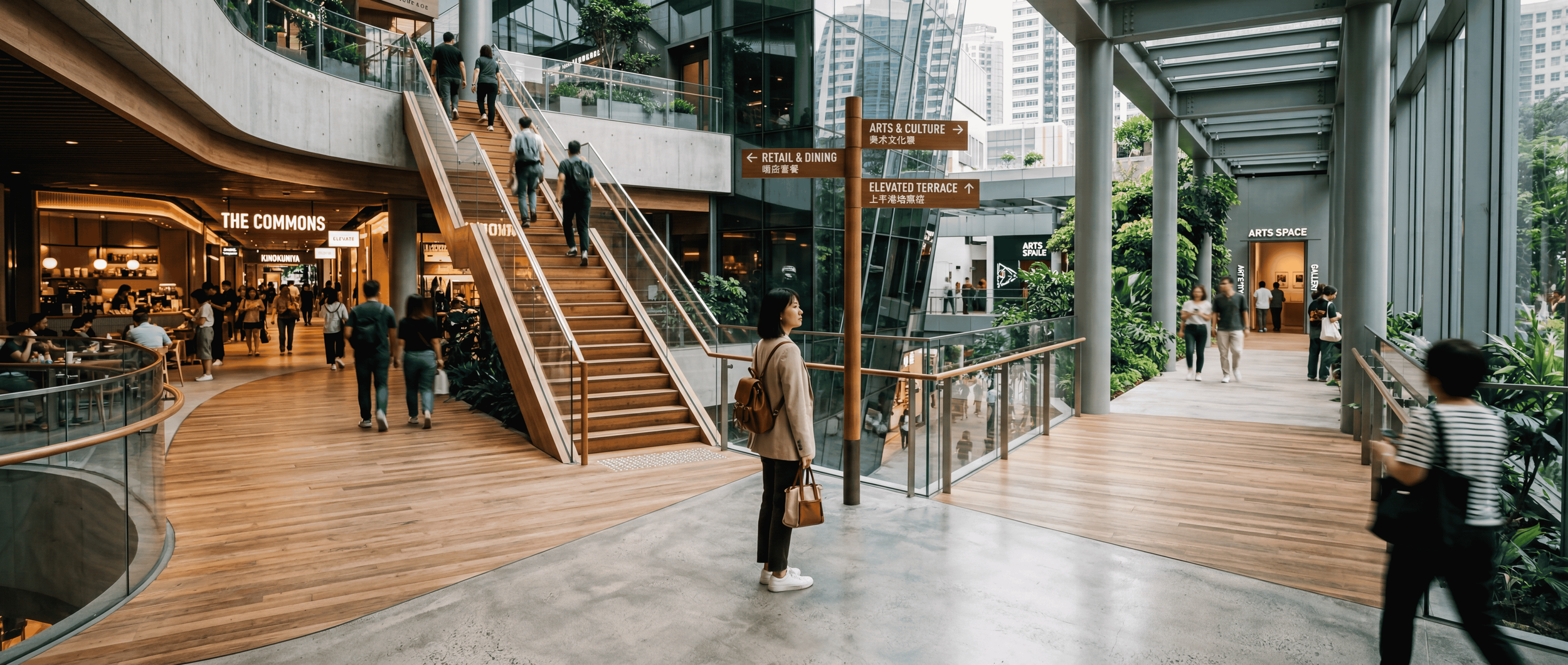
What We Deliver
01 — Wayfinding Strategy & Information Design
The intellectual core of wayfinding — how visitors navigate, what they read, in what hierarchy.
The strategic work of defining a destination's navigation logic — information hierarchy, naming conventions, colour coding, and the relationship between physical signage, digital touchpoints, and architectural cues. Wayfinding Strategy & Information Design produces the intellectual framework that every sign, screen, and spatial cue is designed against — multilingual from the outset, calibrated to the navigation patterns of populations drawn from highly diverse cultural and linguistic backgrounds, and built to work as one system from arrival to departure.
02 — Map Making & Pictogram Development
The visual language that turns navigation strategy into a system visitors can read.
The craft work of designing the graphical assets that anchor a wayfinding system — destination maps, directional pictograms, iconography, and the visual language that allows visitors to recognise where they are and where they are going. Map Making & Pictogram Development produces the carefully calibrated visual system that crosses language, culture, and literacy levels — designed to perform at every scale from the device in a visitor's hand to the architectural sign visible at distance.
03 — BIM 4D Planning & Spatial Coordination
The technical integration that resolves wayfinding before construction.
The work of placing wayfinding into the project BIM model — through Revit and Navisworks integration, geospatial information systems, and detailed coordination with architects, engineers, and operators on the destination's master design model. BIM 4D Planning & Spatial Coordination produces the technical resolution that ensures every sign location, sight line, and structural detail is decided before tender — not discovered during construction, when the cost of correction multiplies tenfold.
04 — Technical Design & On Site Management
The discipline that takes wayfinding from approved design to installed reality.
The full-lifecycle work that ensures what was designed is what gets built — technical drawings, material specifications, fabrication documentation, tender management, prototype evaluation, and on-site installation oversight. Technical Design & On Site Management produces the documented system and the supervised delivery that closes the gap between design intent and installed outcome — managed end-to-end, from the first technical drawing to the last sign commissioned.
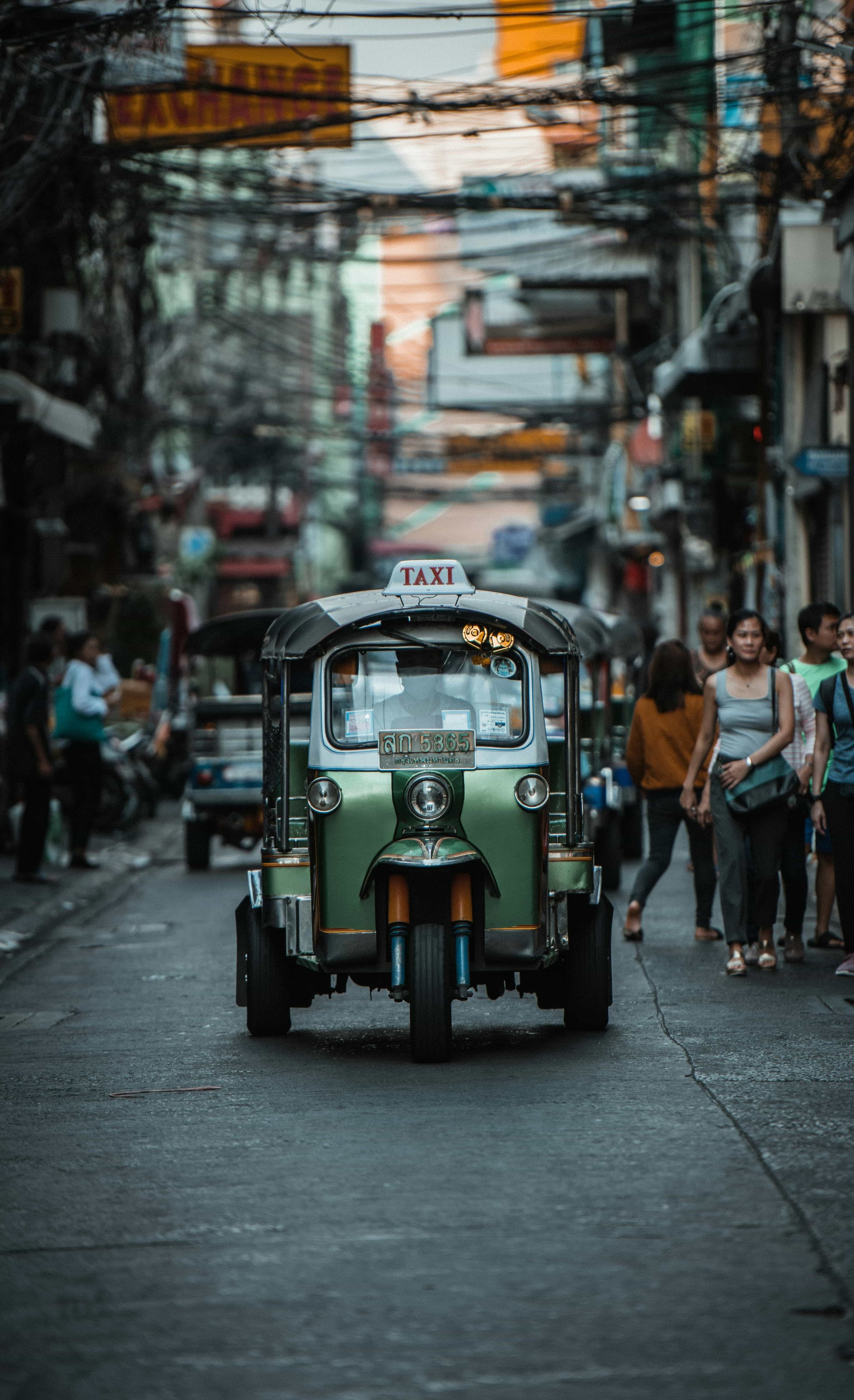
Designing for Asia
Wayfinding in Asia-Pacific presents a unique set of technical and cultural challenges that most international consultancies are not equipped to handle — and the consequences of getting it wrong show up in every mall, transit interchange, hospitality destination and mixed-use precinct where visitors are lost, frustrated and leaving earlier than they should. Understanding what wayfinding means in practice in this region is fundamentally different from understanding what wayfinding means in London or San Francisco.
Multilingual signage architecture is not a translation exercise. Singapore operates in four official languages — English, Mandarin, Malay and Tamil — and across ASEAN the linguistic complexity is even greater. Most international wayfinding firms design in English first and bolt secondary languages on as afterthoughts, producing cramped, illegible character treatments that fail Chinese diaspora users, Malay-Islamic populations and Tamil-speaking communities equally. We design bilingual and multilingual systems with appropriate visual weight from the outset. Simplified Chinese is treated as a primary design language alongside English. Information hierarchy, character sizing, and legibility distance are calibrated to each script's specific properties — not retrofitted at the end of design development.
Climate-resistant material specification is critical in environments where outdoor wayfinding faces year-round tropical humidity, monsoon water intrusion, intense equatorial UV exposure, salt air at coastal sites, and the condensation and mould risk that destroys substrates specified for temperate or even Middle Eastern conditions within months. Standard wayfinding hardware specified from European or North American libraries fails predictably in Singapore, Bangkok, Jakarta and Manila. We specify materials proven to perform in tropical conditions: humidity-stable substrates, anti-corrosive fixings for waterfront and elevated transit sites, fade-stable inks rated for equatorial UV, and detailing that anticipates the failure modes specific to monsoon and high-humidity environments.
Cultural and behavioural considerations shape everything from iconography selection to information point placement. Asia-Pacific visitor populations are multilingual, multi-faith, and generationally diverse. Wayfinding must serve the Chinese diaspora visitor, the Malay-Islamic resident, the Tamil-speaking commuter, the Japanese or Korean tourist, and the Western international visitor — often within the same hour, in the same destination. Information architecture has to work for the local resident who visits weekly and the international visitor arriving for the first time, with the cultural literacy to read iconography correctly across all of them.
Mass-transit interchange complexity defines the regional benchmark. Asia-Pacific contains some of the most navigated public environments in the world — Changi Airport's terminals, Singapore's MRT network, Hong Kong's interchange stations, KLIA, Suvarnabhumi, NAIA. Visitor expectations of wayfinding clarity are calibrated to these benchmarks. Destinations that fail to meet them — malls with confusing internal navigation, hospitality venues with poor arrival sequences, mixed-use developments with inconsistent signage — are immediately read as below standard by Asian visitors.
These are not edge cases. They are the baseline requirements for wayfinding that actually works in this region.
Why Developers Choose Us.
Singapore office, Asia-Pacific reach.
Our Singapore office is on the ground in the region we design for. Our team works in the climate, navigates the multilingual depth of ASEAN markets, and understands the wayfinding standards calibrated to mass-transit and aviation-grade benchmarks across the region. We do not need cultural adaptation workshops — this is where we work. That regional grounding is what makes us a credible wayfinding consultant for Asia-Pacific.
A decade of wayfinding delivery in demanding conditions.
Creative Dialog has delivered wayfinding strategy, signage design and implementation across some of the most complex destinations of the past decade — environments built for multicultural audiences in extreme conditions, with zero tolerance for failure. Multilingual integration, climate-responsive specification, BIM-coordinated delivery, and integration of wayfinding with brand and placemaking translate directly to the conditions ASEAN destinations face. The methodology has been forged through delivery; it is not adapted from a template.
We fix what others get wrong.
Approximately 80% of our wayfinding engagements involve remediating systems that failed under other consultancies — systems designed by firms without direct experience of the region's conditions. Empty information points. Bilingual treatments that disrespect one or both languages. Materials that fail within two seasons. Information architecture that confuses both first-time visitors and weekly residents. We have diagnosed these failures across a decade of remediation work, and that diagnostic experience informs every wayfinding system we design from scratch. Our visitor experience design approach starts with strategy and diagnosis, not aesthetics.
Strategy first. Signage second.
Most wayfinding consultancies focus on design intent and stop short of implementation. We do not. We manage the entire process — from initial visitor experience audit through BIM coordination, tender documentation, fabricator evaluation, prototype approval and on-site QA/QC. When you engage Creative Dialog, there is no gap between what was strategised and designed and what gets built. This full-lifecycle approach is what separates strategic wayfinding consultancies from signage design suppliers.
We connect wayfinding to brand and placemaking.
Wayfinding does not exist in isolation. Our integrated approach ensures your navigation system reinforces your destination brand and works in concert with your placemaking strategy — creating a coherent visitor experience rather than a collection of disconnected elements. This integration is how we extend the visitor experience from arrival to departure, and it is Creative Dialog's core differentiator as a destination experience consultant.
Connected Services.
Branding Works Best With...
Placemaking
Translate your destination brand identity into the physical environment through spatial design, cultural programming, public art, and public realm activation. Our placemaking design services ensure your place brand strategy is experienced — not just communicated.
Strategy
Define the strategic foundation that every successful destination is built on. Through our proprietary Belonging Framework™ — built around three guiding principles of Clarity, Comfort, and Connection — we map how visitors will experience your destination before a single design decision is made.
Destination Branding
Define the identity and narrative that your place expresses. Our destination branding and brand strategy and design work gives placemaking its soul — without a strong destination brand identity, even the best spatial and public realm design lacks meaning. Through environmental branding, we ensure your place brand strategy is visible in every physical touchpoint.
Request Proposal.
Ready to transform your destination?
Fill out some info and we will be in touch shortly.
We can’t wait to hear from you!

Our Professional Affiliations