5 Key Questions to Ask Before Undertaking a New Wayfinding Program.
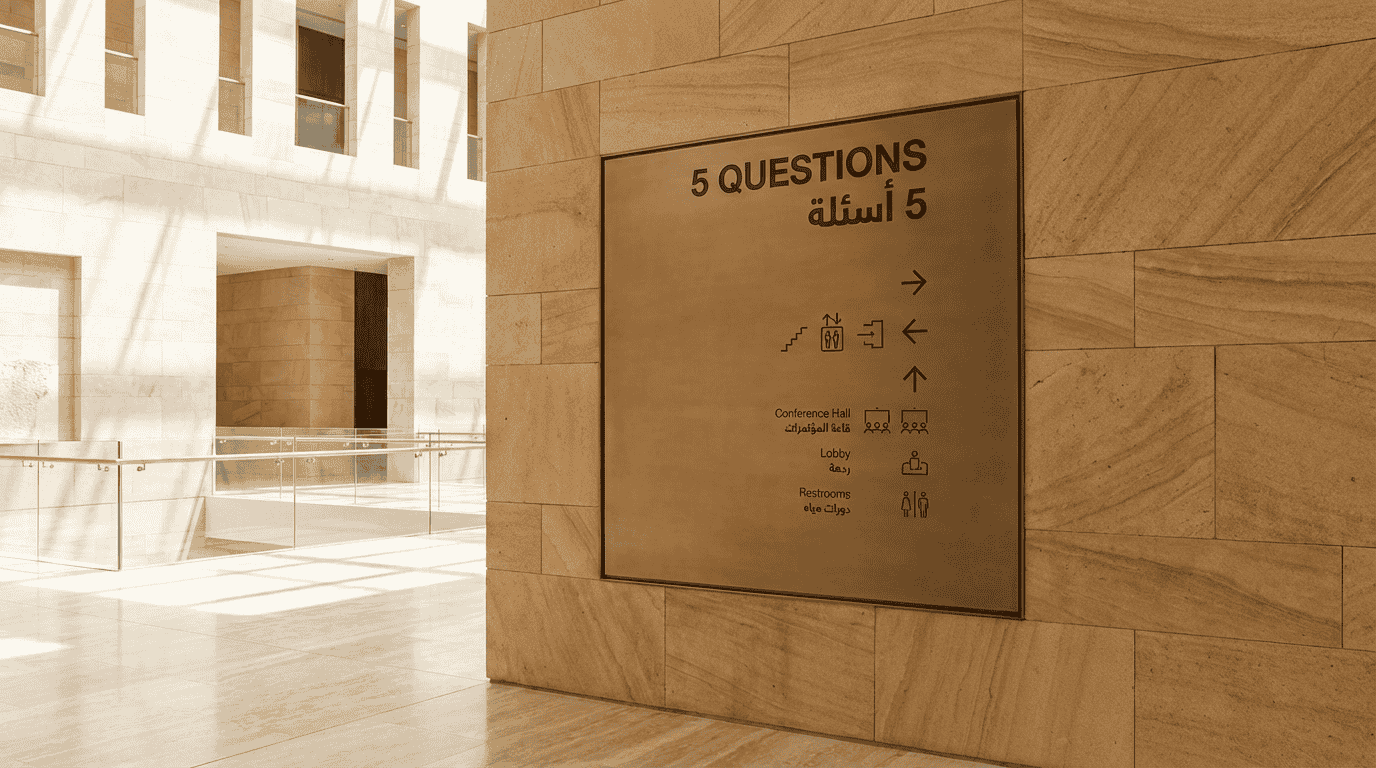
Our top five questions a developer should ask at project level before they begin.
For asset owners and operators across Asia-Pacific, providing your visitors and guests with a positive visitor experience has never been more important than it is today.
As destinations and attractions across Singapore, Bangkok, Kuala Lumpur, Jakarta, and the wider region clamour for visitor loyalty against a backdrop of increased competition for time-poor consumers, it's important for developers and their marketing teams to recognise that the razzmatazz of visual and digital displays and the lure of once-in-a-lifetime experiences (while important) falls short with consumers when compared to the simple things — like not getting lost trying to find a destination, and once there, being able to get around quickly and easily with a minimal amount of friction and maximum convenience. And when the fun is over and it's time to go home, guests really do not want to get lost and frustrated in the car park on the way out.
Experienced wayfinding and placemaking practitioners like Creative Dialog understand this, and our role as an integrated wayfinding consultancy is to help our partners deliver user-centric, visitor-focused wayfinding programmes that have a positive impact on the visitor experience.
1. Choose a Strategic Partner, Not a Signage Vendor.
The first decision that determines the quality of any wayfinding programme is the kind of partner you choose to work with. Wayfinding is a strategic discipline before it is a design or fabrication exercise — and the difference between a strategic wayfinding consultancy and a signage contractor or branding agency is the difference between a system that performs over time and a collection of signs that may look right at handover but unravel under real visitor load.
The signs to look for in a strong partner are straightforward: do they lead with strategy before they show you renders? Can they articulate how their methodology integrates with placemaking and destination branding? Do they evidence a track record of working through the full delivery cycle — research, strategy, design, BIM coordination, fabrication oversight, and on-site QA — rather than handing off after design intent? Will they tell you when a brief needs reframing, or simply respond to whatever specification arrives?
After more than 25 years in the field, we've seen what happens when these questions go unasked — and equally, what becomes possible when they are answered well. Choosing the right strategic partner from the outset is the single most consequential decision a developer makes on a wayfinding programme. The good news is that the criteria are knowable, and the questions above are a reasonable place to start.
2. Start with a well thought out strategy.
Strategy is not a gimmick. Quality wayfinding consultants know that strategy is the key to visitor navigation success. If you're assessing a prospective wayfinding consultant and the word strategy doesn't come up in big bold letters or conversation, then our advice would be to start looking elsewhere.
As life and the spaces we encounter become more complex, the need for cities, master developers, and asset managers to understand how people get to these places and navigate them has become more important than ever to ensure visitors are provided convenience as well as memorable and positive user experiences — and it all starts with a well-honed wayfinding strategy.
The need for any destination to allow visitors to easily find it and navigate it is essential in a competitive marketplace. A well thought out wayfinding strategy and good navigation planning by an expert, when combined with the appropriate visual cues (as well as quality designed signage), can get most people from Point A to Point B. However, without that carefully constructed wayfinding strategy and masterplan, poorly implemented signage can turn out to be inefficient, inconvenient, and potentially cause more problems than it seeks to solve.
When it comes to developing a wayfinding strategy, practitioners like Creative Dialog with a proven track record of success take the time and the effort to apply more than 25 years of experience to deliver highly detailed strategies for wayfinding across retail, hospitality, medical, and the wider built environment — like master-planned residential communities — that quickly and effectively explain the issues to the stakeholder group and put the visitor first.
3. Real design is important, but designing for real people is even more important.
One of the greatest misnomers in the field of wayfinding is that wayfinding is just signage. Of course, to the casual observer this may look like the case; however, to the seasoned professional, signage is only a small element that goes into framing a successful wayfinding strategy. With that said, when it comes to signage design itself — along with the information that is to be designed for the signage content — experienced consultants know that it's important to have a strong handle on factors such as clarity, legibility, scale, colour, and materiality in order to provide the best design outcome for any given system.
These are ideas that often escape the novice designer, where in many cases 'design' seems to mean copying a handful of images from Pinterest. At the other end of the scale, we are often confronted with either a complete lack of design or overly elaborate and ostentatiously designed systems that seem to be designed to be trendy or as a trophy for the designer, and not seemingly designed for real people to actually use — all the while the costs of implementation of such systems get higher and higher for no good reason. Designing to keep the client's costs down while still being elegant and innovative is our approach, and it's one that is highly appreciated by our collaborative partners who understand the value of real design.
In most cases, the best designed wayfinding signage sits humbly in the background, doing its job with little fanfare while still remaining contextual to its environment. That's because wayfinding is actually about understanding the human factors that go into how and why people navigate the spaces that they visit. Yes, signage can become a part of embellishing a site narrative or extending the brand expression of a well-crafted destination — but seldom does the signage itself need to be the star of the show.
4. Visitor is the hero, so know your audience.
As visitor experience specialists, our mantra and approach to practice is around human-centred design. Everything we do as a strategy and design business is aimed at improving the visitor experience. When it comes to developing wayfinding systems across Asia-Pacific, it's critically important to understand the unique urban and cultural context of the region — tropical climate dynamics, multilingual populations, multi-faith calendars, and the spatial cultures that shape how people inhabit public space — and pair this with experience-based strategies that resonate with people. Because people are at the centre of everything we do.
This is where experienced practitioners take the time to deeply understand how people perceive and use the spaces around them on a daily, occasional, or seasonal basis, and this comes from undertaking research and developing a deep-rooted sense of the region and the people that inhabit it.
With more than a decade of integrated visitor experience practice across some of the world's most complex destination environments — and a methodology now applied across Asia-Pacific — we have developed this keen sense of contextual intelligence. Across all of our engagements we have undertaken a deep dive of the local context and audiences in order to tailor a nuanced strategic approach that meets the needs of the people and the environments that they inhabit. Pairing qualitative and quantitative audience behaviours and insights with a well-considered wayfinding strategy is a powerful tool to drive visitor experience success across any destination.
5. Don't forget the importance of implementation.
While clients like to pay an enormous amount of attention to the visual side of any wayfinding design, the implementation side of a signage and wayfinding programme is equally — if not more — important than the renders, as it is the final product that will be consumer- and visitor-facing.
When contemplating the right partner to collaborate with, it's important to look past the showcase of renders and assess their ability to form positive relationships with all of the key stakeholders, including (and importantly) the selected vendor who will be manufacturing and rolling out the wayfinding programme. Quality design is easily let down by poor fabrication, and it takes a highly experienced consultant team to be able to foresee potential issues at the implementation stage before they become a live issue at site, or worse — post-roll-out — where extra time and resources are required for corrective measures.
The roll-out of a wayfinding programme can involve literally thousands of individual items across numerous sign types, with each custom-built item needing to be exacting in its output, content, and placement in order for the overall system to be a success. Deciding on an implementation strategy is another key aspect of the rollout — for instance, will it be a phased rollout or a one-time launch? What resources will need to be allocated against what timeline, and are the expectations at senior level realistic?
Only the most experienced practitioners who have a solid understanding of materiality and manufacturing processes, as well as project and client-side management — along with all of the upfront skills like strategy and design — are able to straddle these often-competing spheres of influence during a signage rollout. By collaborating with expert wayfinding consultants, you can be assured that your wayfinding system will be not only visitor-focused and user-friendly, as well as aesthetically pleasing, but factors such as quality assurance and implementation are also taken care of in the best way possible.
We have been up close and personal on all sides of the signage implementation process, and we know it is filled with obstacles and pitfalls that could arise from almost any angle. Thankfully, our two decades of experience has allowed Creative Dialog to lead from the front and bridge the gap between client and contractor through adopting an experienced-based approach that facilitates open communication and transparency, as well as setting expectations of all stakeholders in the process. From budgeting and tendering all the way through to site and factory visits, we take a highly proactive and quality-focused approach to ensure that the system is rolled out properly each and every time, down to the final sign.
Bottom Line:
When contemplating your destination's visitor-facing needs, the implementation of a quality wayfinding and signage programme should be at the top of the list. When doing so, we highly recommend seeking out industry leaders who understand the need for a strategy-forward approach that puts people first, while still being able to handle all of the various factors that make up a desirable outcome for both client and visitor.
Where wayfinding is underperforming or about to enter a new project phase, our Belonging Audit™ provides a structured starting point — assessing how your destination performs against the four dimensions of belonging: Navigate, Recognise, Connect, Dwell.
Like What Your Reading?
These articles are a small part of our research and strategic advisory Services. Get in touch with Creative Dialog today to see how we can distill these insights into actionable strategies and solutions to improve the visitor experience across your destination.
Looking for deeper analysis of the Visitor Experience economy?
Read more over at Extended Dialog.