Destination DNA: What Drives Memorable Brand Experiences?
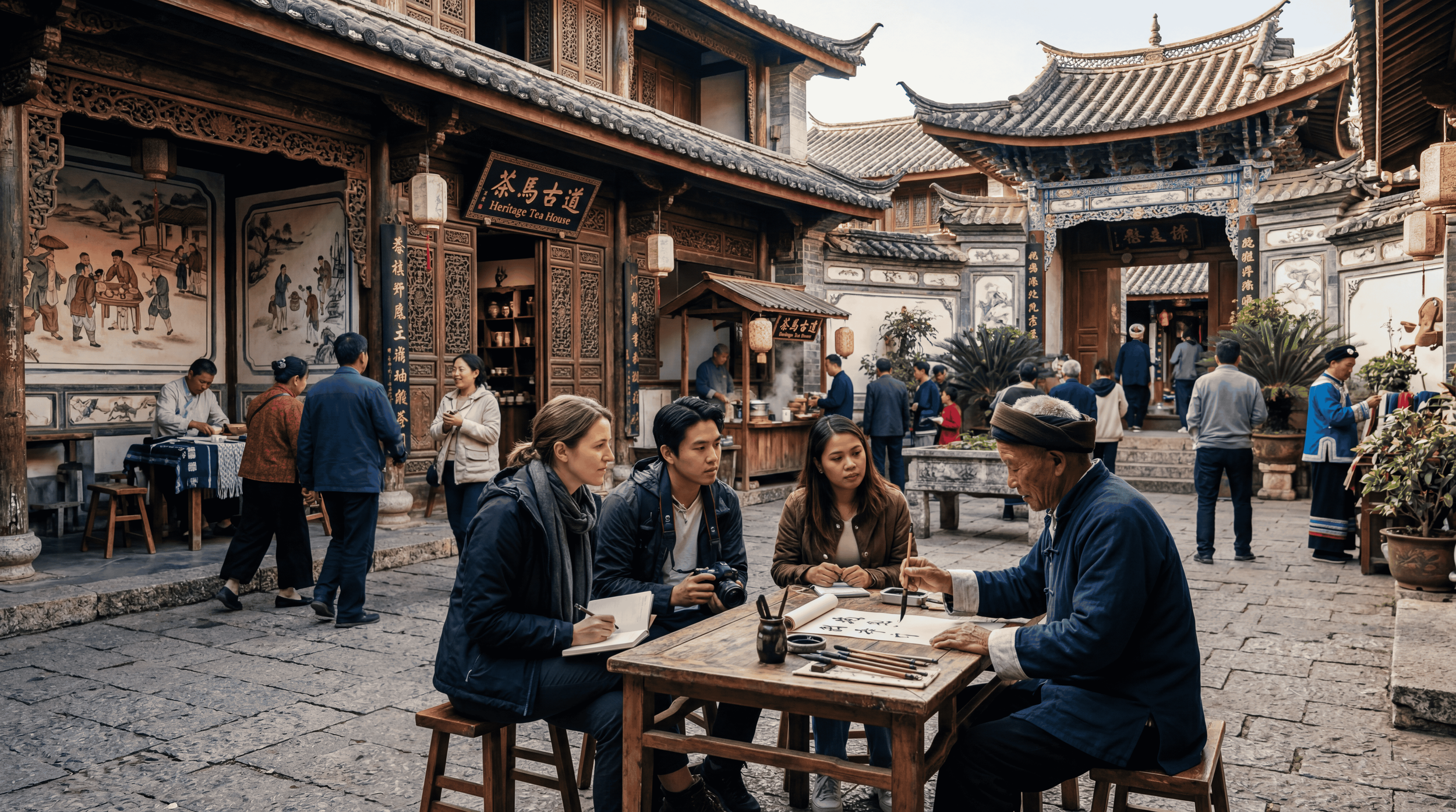
How to uncover what makes an Asia-Pacific destination genuinely different — and build a brand strategy around it.
The most magnetic destinations in the world didn't get there by copying someone else's playbook. They got there by uncovering what was already uniquely theirs. In this article, we introduce the concept of destination DNA — the intersection of geography, history, and living culture that produces experiences impossible to replicate elsewhere — and share the framework we use to help Asia-Pacific destinations excavate, articulate, and amplify the authentic foundations that drive lasting visitor loyalty and sustained economic performance.
There's a moment in every destination branding engagement that separates projects destined for lasting impact from those headed toward expensive mediocrity. It happens when someone in the room says, "We want to be the next Singapore" — or Tokyo, or Dubai, or wherever the current aspirational benchmark sits. That sentence, however well-intentioned, reveals a fundamental misunderstanding of how memorable destinations actually work.
The most magnetic places in the world didn't become compelling by emulating someone else's success. They became compelling by excavating and amplifying what was already uniquely theirs. Think of it as destination DNA — the fundamental genetic code of a place formed at the intersection of history, culture, landscape, and lived human experience. This code produces something unrepeatable anywhere else. And unlike a logo or a tagline, it can't be manufactured in a boardroom.
At Creative Dialog, we've spent a decade refining this discipline across some of the world's most culturally complex destinations — and now apply it across Asia-Pacific. The process demands patience, cultural sensitivity, and a willingness to look beneath the surface of what's obvious. But the returns — in visitor loyalty, authentic differentiation, and sustained economic performance — make the investment transformative.
Why Authenticity Has Become Non-Negotiable
Modern travellers, particularly those drawn to Asia-Pacific, have developed a finely tuned ability to distinguish between genuine cultural experiences and staged performances. Research consistently shows that visitors spending time in places with authentic placemaking elements develop significantly stronger emotional connections than those encountering manufactured environments. These connections translate directly into extended stays, higher spending, and the kind of organic word-of-mouth that no marketing budget can replicate.
This discernment has sharpened dramatically in the social media era. A visitor who encounters something genuinely unique — a traditional fishing technique still practised along a Vietnamese river delta, a centuries-old water-management system that inspired a development's landscape design, an architectural detail drawn from regional building traditions rather than imported from a Pinterest board — shares it with authenticity that resonates.
Conversely, staged experiences designed purely for tourist consumption get identified and critiqued in real time, sometimes going viral for all the wrong reasons.
For Asia-Pacific destinations, this represents both challenge and extraordinary opportunity. The region possesses cultural depth that most competing global destinations simply cannot match — layered histories of trade, migration, craft, and adaptation to some of the world's most demanding tropical environments. The task isn't inventing a story. It's learning to tell the ones already embedded in the landscape.
A Framework for Cultural Excavation
Developing a robust understanding of destination DNA requires working through three distinct layers, each revealing different dimensions of what makes a place genuinely distinctive.
The first layer is geographic and climatic. How has the relationship between people and landscape evolved over centuries? What survival strategies, building techniques, and lifestyle adaptations emerged from specific environmental conditions? Across Asia-Pacific, where communities have negotiated tropical heat, monsoon rainfall, and complex coastal and riverine geographies for millennia, this layer is extraordinarily rich.
The kampung houses raised on stilts for cross-ventilation and flood resilience, the deep verandahs and shaded interiors of traditional Malay and Peranakan dwellings, the five-foot ways (kaki lima) of shophouse architecture that provide continuous covered pedestrian routes through the urban fabric, the courtyard houses adapted for tropical conditions across Singapore, Penang, Hoi An, and Yogyakarta — these aren't quaint historical curiosities. They represent sophisticated responses to environment that carry genuine meaning and, when thoughtfully integrated into contemporary development, create the kind of experiential authenticity visitors find deeply compelling.
The second layer is historical. What waves of cultural influence, trade relationships, and political developments have left their mark? Asia-Pacific sits at the heart of the Maritime Silk Road and the Spice Routes — the great trans-oceanic networks that connected China, India, the Arab world, and Europe through centuries of commerce. The Strait of Malacca alone has shaped the cultural identity of an entire region, producing Peranakan, Eurasian, and Straits-Chinese cultures that are themselves living evidence of cross-cultural exchange.
Port cities — Singapore, Penang, Melaka, Hoi An, Surabaya, Manila — carry layered architectural and culinary records of these encounters. Understanding these historical layers helps identify which cultural elements represent genuine local innovations, how different cultural streams have merged to create something uniquely specific to that place, and which traditions carry contemporary relevance versus purely historical interest.
The third layer examines destination culture. How do traditional practices manifest in modern life? What aspects of historical culture continue to influence contemporary social interaction, creative expression, and daily routine? This is where destination DNA reveals its most powerful differentiators — not in museum displays but in living practices.
The way coffee is prepared and served in a kopitiam or a Vietnamese cà phê stall, the social rituals around hawker-centre dining and shared communal tables, the contemporary artists reinterpreting traditional motifs from batik, songket and Peranakan tilework, the entrepreneurs building businesses that bridge heritage and innovation — these are the daily practices that anchor identity in something visitors can experience directly.
The Sensory Fingerprint
Every destination possesses a unique sensory signature, and Asia-Pacific's sensory landscape is among the richest in the world. This extends far beyond visual architecture to encompass the acoustic environment — the layered multi-faith soundscape of Singapore, where temple bells, the adhan from neighbourhood mosques, Hindu temple drums, and Buddhist chanting coexist within walking distance; the cadence of bargaining and order-calling at hawker centres and wet markets; the percussive sounds of street food preparation; the gamelan rhythms drifting from Indonesian and Balinese contexts; the sound of monsoon rain on banana leaves and tile rooftops.
Olfactory experiences prove particularly powerful in creating lasting memories. The scent of pandan leaves and frangipani blossom, the cooking aromas — kaya toasting, sambal frying, satay smoke, laksa broth, kopi roasting — that announce a neighbourhood before any visual signal does, the incense at Chinese temples and Hindu shrines, the petrichor of monsoon rain on hot pavement and tropical foliage, the particular scent of jasmine and tuberose in evening gardens — these sensory elements form an emotional architecture that visitors carry with them long after departure.
At Creative Dialog, we document these sensory dimensions as carefully as we map physical spaces. When a destination's wayfinding, placemaking, and brand expression work in harmony with its natural sensory signature rather than against it, the result is an experience that feels effortlessly authentic. When they contradict it — generic international music drowning out local soundscapes, imported plantings replacing indigenous species, clinical air conditioning replacing the carefully designed climate transitions of traditional architecture — visitors sense the disconnection even if they can't articulate it.
Community as Custodian
Perhaps the most consequential decision in any destination DNA process involves recognising who holds authority over cultural meaning. External consultants — ourselves included — can identify patterns and document traditions. But only community members can speak to the deeper significance and contemporary relevance of cultural practices.
This requires a genuine shift from extractive research models that mine communities for content toward collaborative approaches that position local residents as partners. We've observed across our regional work that destinations employing participatory cultural mapping consistently identify more distinctive positioning opportunities than those relying solely on expert assessment.
The reason is straightforward: community members understand which traditions remain vital and evolving versus those preserved primarily for historical record. They know the appropriate contexts and protocols for sharing different aspects of heritage with visitors. And they possess the nuanced understanding of how their culture continues to adapt — the living quality that distinguishes authentic experience from cultural taxidermy.
From DNA to Distinctive Value
Understanding destination DNA serves a deeply practical purpose: creating competitive advantages that cannot be replicated. Destinations that successfully identify and amplify their authentic cultural foundations offer experiences available nowhere else, generating the kind of differentiation that sustains premium positioning through market cycles.
This matters enormously for Asia-Pacific destinations competing for global attention. As developments across the region reach increasingly comparable standards of physical quality, the distinguishing factor shifts from infrastructure to meaning — from what a place looks like to what it feels like, and why that feeling is available only here.
When destinations succeed in this translation, they create cultural ambassadorship. Visitors become advocates not just for the destination but for deeper understanding of the culture they've encountered. This advocacy extends influence far beyond geographic boundaries and builds relationships that transcend single visits, generating the kind of sustained, organic growth that manufactured destinations — however lavishly funded — consistently fail to achieve.
The destinations that will thrive in Asia-Pacific's next chapter won't be those with the biggest budgets or the most dramatic architecture.
They'll be the ones that invested in understanding what was already remarkable about their place, and had the strategic discipline to amplify it rather than replace it with someone else's story.
Where authentic identity has yet to be excavated, our Belonging Audit™ provides a structured starting point — assessing how your destination performs against the four dimensions of belonging: Navigate, Recognise, Connect, Dwell.
Like What Your Reading?
These articles are a small part of our research and strategic advisory Services. Get in touch with Creative Dialog today to see how we can distill these insights into actionable strategies and solutions to improve the visitor experience across your destination.
Looking for deeper analysis of the Visitor Experience economy?
Read more over at Extended Dialog.